Tea Tree Oil for Itchy Scalp: Causes, Protocols & Relief
How to use tea tree oil for itchy scalp. Learn which causes respond to treatment, proper dilution, step-by-step protocols, and when to see a doctor.
Tea Tree Oil for Itchy Scalp: What the Research Actually Shows
If you're reading this, your scalp is probably driving you crazy right now. That constant itch, the urge to scratch even though you know it'll make things worse, the frustration of trying product after product without relief—I get it. We hear from people about scalp itching at least once a week here at OrganicExpertise, and honestly, the answers aren't as straightforward as most websites make them sound.
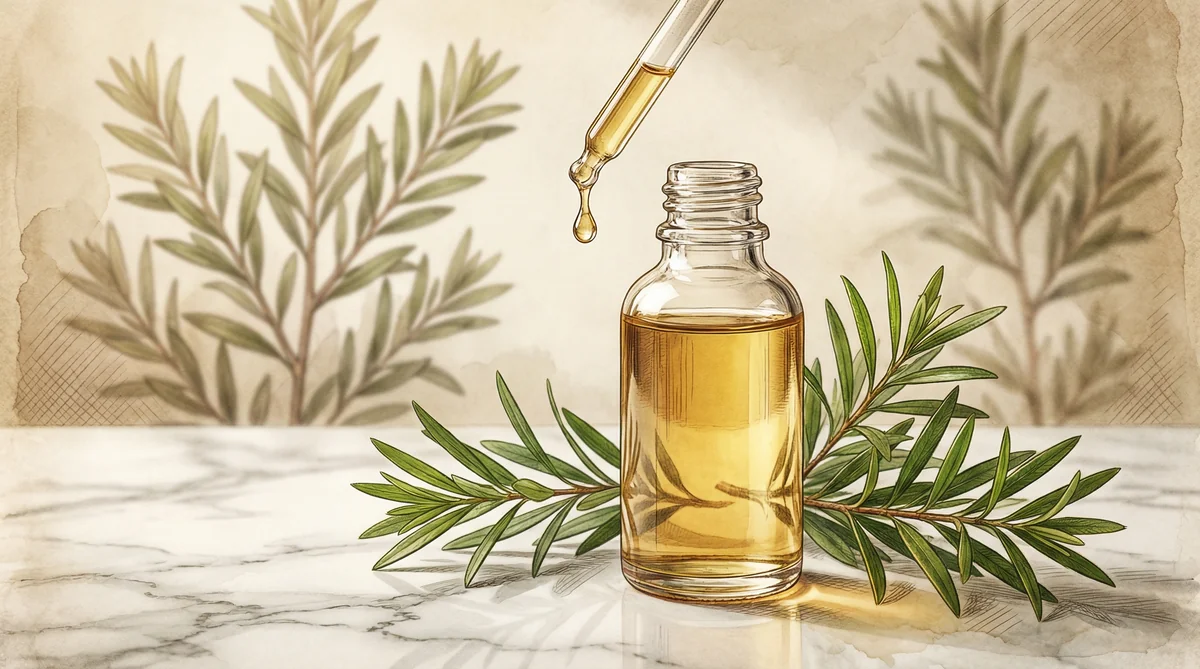
Here's what I want to tell you upfront: tea tree oil can help with an itchy scalp, but only for certain types of itching, at the right concentration, and used the right way. Get any of those details wrong, and you might actually make things worse. So let's dig into what the research actually says, why tea tree oil works when it works, and exactly how to use it safely and effectively.
Understanding Your Itchy Scalp First
Before we talk about tea tree oil as a solution, we need to talk about what's actually causing your itch. This matters more than you'd think.
An itchy scalp has several possible culprits, and tea tree oil doesn't help with all of them. In fact, using it for the wrong type of itching can be a waste of time—or worse.
Tea tree oil helps with:
- Dandruff (Malassezia-related): Oily, diffuse flakes with generalized itching
- Seborrheic dermatitis: Red patches, greasy or yellowish scales, concentrated itch
- Mild folliculitis: Itching with small bumps, often from bacterial colonization
Tea tree oil does not help with:
- Dry scalp: Tight feeling, small dry flakes—tea tree oil may actually worsen this
- Contact dermatitis: Itching from an allergic reaction to another product
- Scalp psoriasis: Autoimmune condition requiring medical treatment
- Product buildup: Needs clarifying first; tea tree oil is limited help here
The distinction matters because I've seen people spend months using tea tree oil for dry scalp itching, wondering why it's not working. The answer is: it's not supposed to work for that. You're using the right tool for the wrong problem.
Here's how to figure out which you have: Is your scalp oily or dry? Do you see flakes or red patches? Is the itch concentrated in one area or spread across your whole scalp? These details tell us whether tea tree oil is actually what you need.
The Science Behind Why Tea Tree Oil Works
Let's talk about what's actually happening at the cellular level when tea tree oil helps with an itchy scalp.
Quality tea tree oil contains roughly 40% terpinen-4-ol, which is the compound doing the heavy lifting. That's the key number to remember—40%. This active compound works through three distinct mechanisms:
1. Antifungal Action Malassezia yeast is the fungus most commonly responsible for dandruff and seborrheic dermatitis. Terpinen-4-ol disrupts the cell membranes of this yeast, essentially breaking down its protective barrier. Without that barrier, the yeast can't survive on your scalp. This is the primary mechanism for why tea tree oil helps with dandruff-type itching.
2. Anti-inflammatory Suppression Here's where it gets interesting. Even if yeast is the underlying issue, much of the itching you feel comes from inflammation—your immune system's reaction to the yeast. Terpinen-4-ol suppresses pro-inflammatory markers including TNF-alpha, IL-1beta, IL-8, and IL-10 by roughly 50% in activated immune cells. In practical terms: less inflammation, less itch, faster relief. This is why people often notice the itching calms down before the flakes completely disappear.
3. Antibacterial Properties Tea tree oil is also effective against Staphylococcus aureus and other bacteria that can colonize an itchy scalp. This secondary benefit helps prevent secondary infections, which is particularly important if you've been scratching.
Plus: The Cooling Sensation There's also a sensory component. Tea tree oil provides a cooling, soothing sensation that genuinely helps break the itch-scratch cycle. That might sound minor, but when you're dealing with constant itching, that relief matters.
What the Clinical Research Actually Shows
The landmark study here is the Satchell 2002 trial, and I want to give you the real numbers because they're more nuanced than most websites suggest.
This was a randomized, single-blind, placebo-controlled trial with 126 participants. One group used a 5% tea tree oil shampoo daily for four weeks. The other group used an identical-looking placebo. Here are the results:
- Tea tree oil group: 41% reduction in dandruff symptoms and itching
- Placebo group: 11% reduction in symptoms
That 41% vs 11% difference is statistically significant and clinically meaningful. But notice something important: even placebo helped 11% of people. That's just what happens when you wash your scalp consistently and people pay attention to their symptoms. Tea tree oil nearly quadrupled the benefit, but it's not a magic cure.
More importantly for you: itching specifically showed statistically significant improvement by week two of daily use. That's the point where people typically think, "Oh, this is actually working." The flakes take longer to resolve, but the itch—the thing driving you crazy—starts improving faster.
How does this compare to other treatments? Here's the honest comparison:
- Ketoconazole 2%: 60-70% improvement (prescription-strength, more effective, but can be drying)
- Selenium sulfide: 50-60% improvement (effective, but distinctive strong smell)
- Zinc pyrithione: 40-50% improvement (gentle, well-tolerated, comparable to tea tree)
- Tea tree oil 5%: 41% improvement (natural, anti-inflammatory, gentle)
Tea tree oil isn't the strongest option, but it's effective, gentle, and offers anti-inflammatory benefits beyond just killing yeast. That matters if your scalp is sensitive or if you want to avoid prescription treatments.
The Critical Detail: Concentration Matters
Here's something most websites get wrong: they recommend tea tree oil without specifying the concentration, and that's where people run into trouble.
The clinically proven effective concentration is 5%. Not 2%, not 10%—5%.
Let me explain why this matters. In my early formulation work, before I really understood the research, I made a batch of tea tree shampoo at 10% concentration. I thought stronger would be better. It wasn't. People reported burning, increased itching, and irritation. I documented that mistake in my formulation journal because it was a valuable lesson: more isn't better with essential oils.
Lower concentrations (2-3%) simply don't work as effectively. You're not getting enough terpinen-4-ol to suppress the yeast or reduce inflammation meaningfully. You're wasting time and money.
Higher concentrations (10%+) don't work better and increase irritation risk without additional benefit. You're just irritating your scalp for no gain.
5% is the sweet spot. That's where the research shows effectiveness. That's where you get results without unnecessary irritation.
How to Use Tea Tree Oil for Itchy Scalp: Two Approaches
If your scalp itching is from dandruff or seborrheic dermatitis, here are the two most effective ways to use tea tree oil:
Approach 1: Tea Tree Oil Shampoo (Daily Use)
What you need:
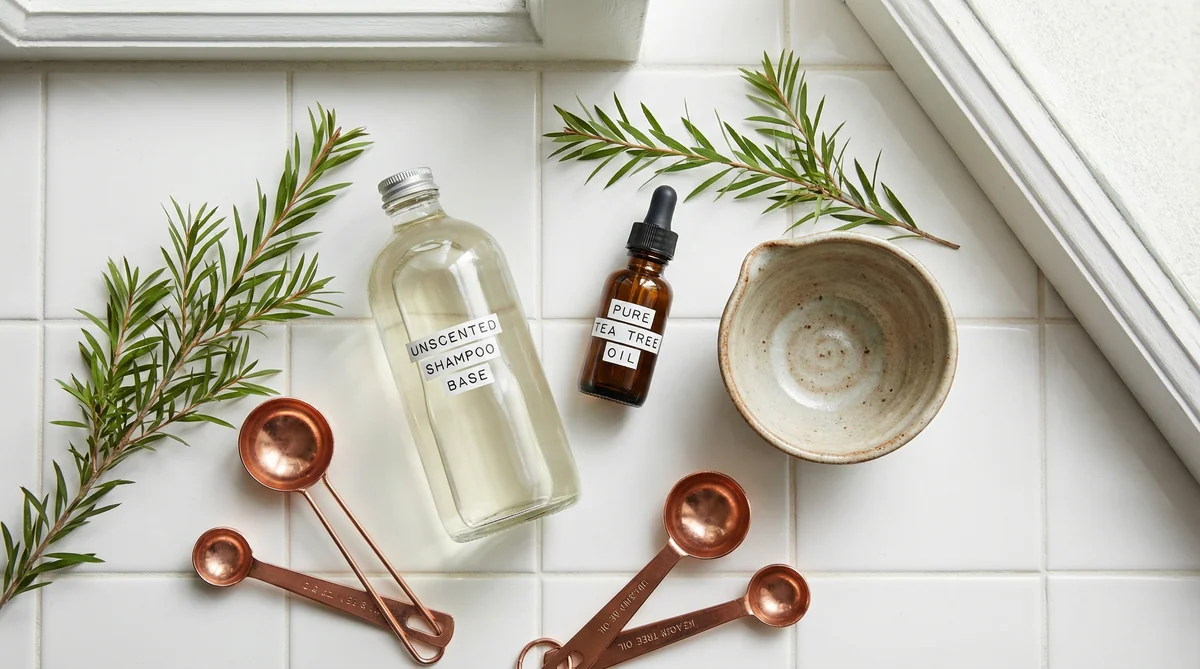
- A gentle, unscented shampoo base (100ml)
- Quality tea tree oil (50 drops)
How to make it: Add 50 drops of tea tree oil to 100ml of shampoo base. This gives you approximately 5% concentration. Mix thoroughly and let it sit for a few hours before using—this allows the oil to distribute evenly.
How to use it:
- Apply to wet scalp
- Massage gently for 1-2 minutes
- Let it sit for 3-5 minutes (this contact time is critical for antifungal action)
- Rinse thoroughly with cool water
- Use daily for the first 4 weeks of treatment
Why the contact time matters: The terpinen-4-ol needs time to disrupt yeast cell membranes and suppress inflammation. Shampooing and immediately rinsing doesn't give it enough time to work. I know 3-5 minutes feels long when you're in the shower, but it's the difference between effectiveness and wasted effort.
Approach 2: Pre-Wash Scalp Treatment (Weekly Use)
If you prefer a less frequent routine or have a sensitive scalp, this works well:
What you need:
- 100ml jojoba oil or fractionated coconut oil (carriers that won't go rancid)
- 50 drops tea tree oil
- Optional: 5-10 drops lavender oil (adds soothing properties without interfering with efficacy)
How to make it: Mix the oils together. Store in a dark glass bottle in a cool place. This keeps for several months.
How to use it:
- Apply the mixture to your dry scalp, focusing on areas of itching
- Use your fingertips to massage it in gently
- Cover with a shower cap
- Leave it on for 20-30 minutes (or longer—this isn't time-sensitive like shampoo)
- Shampoo thoroughly to remove the oil
- Use 1-2 times weekly during initial treatment, then 1 time weekly for maintenance
Why this works: The oil base extends contact time and provides additional soothing benefits. The jojoba or fractionated coconut oil won't clog your scalp (unlike some heavier oils), and the tea tree oil still gets the 3-5 minute contact time it needs when you massage it in.
What to Expect: The Timeline
Understanding the realistic timeline helps you know whether it's actually working or whether you need a different approach.
Days 1-3: You'll notice the cooling sensation immediately. That's pleasant, but don't mistake it for actual improvement—the yeast is still there, the inflammation is still there. You're just feeling the cooling effect.
Week 1: The inflammatory response begins calming. You might notice the itch intensity starting to reduce, but it's subtle. This is when the terpinen-4-ol is actively suppressing those pro-inflammatory markers.
Week 2: Here's where people get genuinely encouraged. Itch frequency becomes noticeably reduced. You're not scratching as much. You might still have some flakes, but the thing that was driving you crazy—the constant itch—is improving. This is statistically significant improvement, and it's real.
Week 3-4: Significant improvement. The itch is largely controlled. Maximum improvement typically appears around week four. Some people see continued improvement into week 5-6, but the major gains happen by week four.
Week 4+: Transition to maintenance. Once you've achieved improvement, you don't need daily use anymore. Most people maintain results with 2-3 times weekly application.
If you're not seeing meaningful improvement by week two, it's time to reassess. Either you have a different type of scalp issue (not dandruff/seborrheic dermatitis), the concentration isn't right, or there's another factor at play. Don't just keep using it hoping it'll eventually work.
Safety First: Who Should and Shouldn't Use Tea Tree Oil
Here's where I get serious, because this is the part that matters for your health.
About 1-2% of the population has a true contact allergy to tea tree oil. That's not a huge percentage, but it's real. If you've never used tea tree oil before, patch test first. Apply a small diluted amount (like 5% concentration) to your inner elbow, wait 24 hours, and look for redness or irritation. I know we mention patch testing constantly, but there's a reason.
Never apply undiluted tea tree oil to your scalp. This is non-negotiable. Undiluted application causes contact dermatitis, burning, and increased itching. I've seen people do this thinking "pure is better," and it's always a mistake.
If you have a dry scalp, tea tree oil probably isn't your answer. It can actually worsen dryness by further stripping oils. A dry scalp needs hydration and gentle care, not antifungal treatment. If you're not sure whether your scalp is oily or dry, that's the first diagnostic question to answer.
If you're experiencing severe itching that disrupts sleep, hair loss in itchy areas, open sores, bleeding, or signs of infection, see a dermatologist. Tea tree oil is for mild to moderate dandruff or seborrheic dermatitis. More serious conditions need professional diagnosis and treatment.
If you have thick crusty scales or the condition is spreading, that's also a dermatologist situation. Those are signs of something more serious than simple dandruff.
Quality Matters: How to Know You're Getting Real Tea Tree Oil
This is something I've learned through my relationships with Australian tea tree growers. When I visit the farms every few years, quality assessment is always the priority concern.
Not all "pure" tea tree oil is actually pure or effective. Here's what to look for:
1. GC-MS Testing Documentation Quality tea tree oil should come with batch testing information showing terpinen-4-ol content of 30-45%. This is the active compound percentage. If the supplier can't provide this documentation, question whether you're getting what you're paying for. GC-MS (gas chromatography-mass spectrometry) is the scientific standard for purity testing.
2. Storage in Dark Glass Tea tree oil degrades in light and heat. It should come in dark glass bottles, not plastic. If it's in clear glass or plastic, the active compounds are already degrading.
3. Cool Storage Environment This matters both for how it's stored before you buy it and how you store it at home. Light, heat, and air exposure all reduce effectiveness over time.
4. Reputable Source Buy from suppliers who specialize in essential oils and can answer questions about their sourcing and testing. The cheapest option on Amazon isn't usually the highest quality.
When to See a Doctor
Safety first, always. Here's when tea tree oil isn't the right answer and you need professional help:
- Severe itching disrupting sleep
- Hair loss in itchy areas
- Open sores, bleeding, or signs of infection
- No improvement after 4 weeks of consistent treatment
- Thick crusty scales
- Condition spreading to other areas
These are signs that something beyond simple dandruff is happening. A dermatologist can properly diagnose and recommend appropriate treatment. Dr. Priya Sharma, a dermatologist I consult with regularly, emphasizes that tea tree oil is a first-line option for mild to moderate dandruff but never a substitute for professional diagnosis when symptoms are more severe.
The Bottom Line
Tea tree oil works for itchy scalp caused by dandruff or seborrheic dermatitis, but only when three conditions are met:
- Right condition: Your itching is from yeast-related dandruff or seborrheic dermatitis, not dry scalp, contact dermatitis, or psoriasis
- Right concentration: You're using 5% tea tree oil, not lower (ineffective) or higher (irritating)
- Right application: You're giving it adequate contact time (3-5 minutes for shampoo, 20-30 minutes for treatment oil)
When those conditions align, expect about 41% improvement—roughly four times better than placebo, with noticeable itch reduction by week two and maximum improvement by week four.
It's not the strongest option available (ketoconazole is more effective), but it's gentle, natural, and offers anti-inflammatory benefits beyond just antifungal action. For many people dealing with mild to moderate dandruff, that's exactly what they need.
Start with a patch test. Use the right concentration. Give it four weeks of consistent use. And if it's not working by week two, reassess whether you're treating the right condition.
Your scalp will thank you—and more importantly, you'll finally get some relief from that constant itch.
Key Takeaways
- Tea tree oil helps with dandruff and seborrheic dermatitis (yeast-related itching), but not dry scalp, psoriasis, or contact dermatitis—diagnosis matters before treatment
- 5% concentration is the clinically proven standard—lower concentrations don't work effectively, higher concentrations increase irritation without additional benefit
- The Satchell 2002 study showed 41% improvement in itching vs 11% placebo, with statistically significant itch reduction appearing by week two of daily use
- Terpinen-4-ol (roughly 40% of quality tea tree oil) works through three mechanisms: antifungal action against Malassezia yeast, anti-inflammatory suppression reducing pro-inflammatory markers by ~50%, and antibacterial properties
- Expect timeline: Days 1-3 cooling sensation only; Week 1 inflammatory response begins calming; Week 2 noticeable itch reduction; Week 3-4 significant improvement; transition to maintenance (2-3x weekly) after week 4